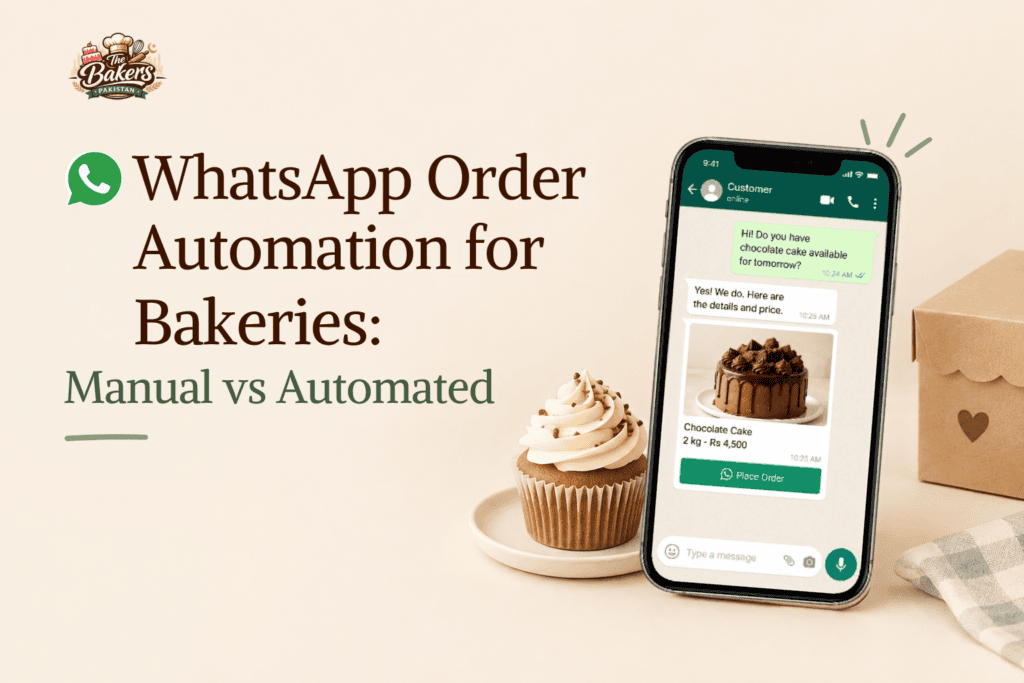
If you’re running a home bakery and taking every order through WhatsApp DMs, you’re not doing anything wrong. Almost every home baker in Pakistan starts this way. The question is whether that setup still works once your order volume grows past what one person can track in their head, and for most bakers, there’s a specific point where it stops.
Here’s an honest comparison of manual order-taking against an automated setup, and where each one actually holds up.
At low volume, this works fine. A customer messages, you reply with pricing, they confirm, you write it down somewhere, done. The trouble starts when you’re handling 20, 30, 40 conversations at once, each with its own flavor, size, delivery date, and payment status buried somewhere in a scrolling chat thread.
The failure points aren’t usually the big details. They’re the small ones: whether a deposit was actually paid, whether “Saturday” meant this Saturday or next, whether the customer confirmed their delivery address or you’re still waiting on it. Those small gaps are where orders get missed, and where a customer quietly orders from someone else next time because you took too long to reply.
Automation doesn’t replace WhatsApp. Your customers stay exactly where they already are. What changes is what happens before and around the conversation.
The personal part of the conversation, design details, dietary requests, the actual relationship, doesn’t go anywhere. What gets removed is typing the same pricing message for the fortieth time. This is exactly what our order automation service is built to handle.
At low volume, under 10 orders a week, manual tracking is genuinely fine. Don’t fix what isn’t broken.
Above that, and especially during Eid, wedding season, or exam results week when volume can triple overnight, manual tracking starts failing in ways that cost real orders. This is also exactly the period when new customers are most likely trying you for the first time. A slow or confused ordering experience during someone’s first order is a bad first impression to make.
A WhatsApp order automation bakery setup typically covers four things: an auto-reply for common questions, a structured order form (flavor, size, date, delivery address, all in one place), simple order status tracking, and a booking calendar showing real availability instead of you checking manually. None of it requires technical skill to manage day to day once it’s set up.
This connects to a wider point worth mentioning: automating bakery orders works best alongside decent visibility, since automating a system that isn’t getting found by new customers in the first place only solves half the problem. If you haven’t looked at how customers actually find bakeries on Google, our guide on local SEO for bakers covers the other half of this.
Order management for home bakers is typically bundled into a broader plan rather than sold standalone. Starter setups begin around PKR 19,000 as a one-time cost, with ongoing plans available for bakeries that want support and adjustments as order volume grows. There’s a full breakdown on the Pricing page.
The Bakers Pakistan works specifically with home bakers, not general small businesses, which means the cake order automation setup is built around how a bakery actually operates: custom orders, seasonal spikes, WhatsApp as the primary channel, and the need to keep the personal touch that makes a home bakery different from a factory. Setup includes a short walkthrough so you can manage day-to-day updates yourself afterward, no ongoing dependency required unless you want it.
Manual WhatsApp order-taking works until it doesn’t, and for most growing home bakeries, that point arrives faster than expected, usually during the exact season when getting it right matters most. Automation isn’t about becoming less personal. It’s about making sure the personal parts of your business get your actual attention instead of getting lost in the sixtieth “what’s your pricing” reply of the week.
No. Customers still order through WhatsApp. Automation works within it, handling the repetitive parts before the personal conversation starts.
There’s no fixed number, but most bakers notice it somewhere between 15 and 25 active orders at once, particularly during seasonal spikes like Eid or wedding season.
No coding is required. Setup includes a walkthrough so day-to-day updates can be managed without ongoing outside help.
Yes, a booking calendar showing real availability is typically included as part of the setup.